Machining involves using cutting tools to remove material from a metal or plastic workpiece in order to give it the desired shape and dimensions. Unlike casting or forging, no material is added; excess material is removed in a controlled manner. For this reason, the method is also referred to as “subtractive manufacturing.”.
Whether it’s machining a block of aluminum to produce a precision fitting or adjusting the diameter of a steel shaft to within a micron, it’s all part of machining. From automotive to defense, and from aerospace to medical, virtually every industry that requires precision relies on this method.
In this article, we explain how machining works, its main methods, the benefits it offers, and when it should be used.
How does machining work?
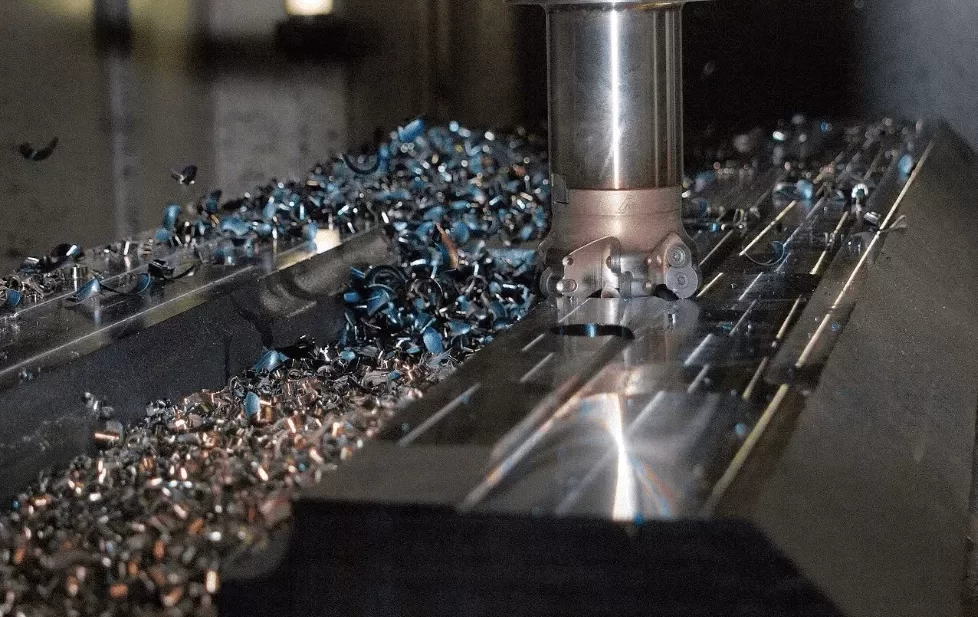
The principle is simple: there is a rotating tool or a rotating workpiece; controlled contact is established between the two, and the cutting edge removes thin layers (chips) from the material. The tool’s rotational speed, feed rate, and depth of cut are predetermined.
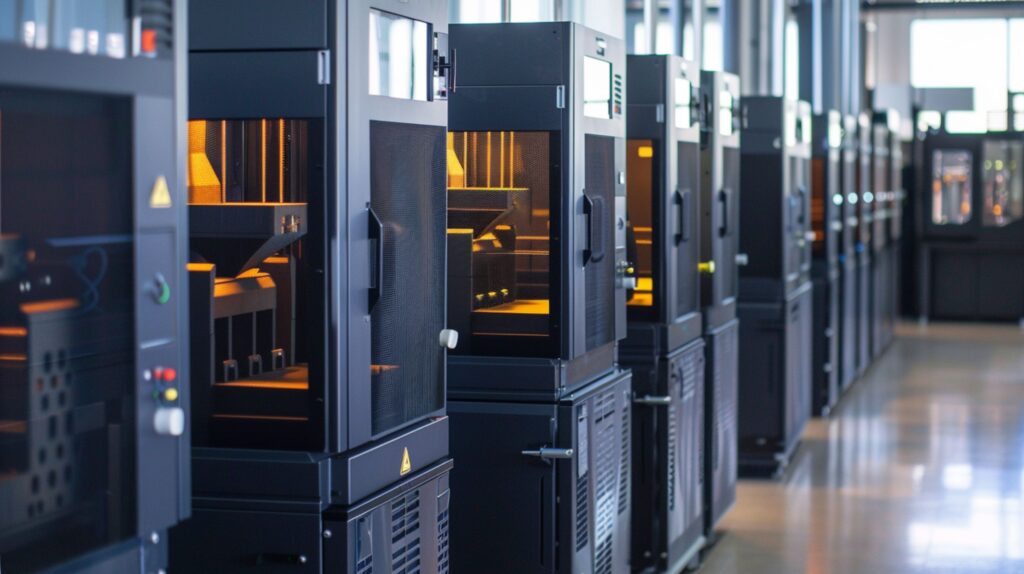
In modern workshops, these movements are controlled by a computer. A 3D model of the part is converted into toolpaths in CAM software, and from there, it is translated into commands (G-code) that the machine can understand. The operator secures the raw material to the machine, starts the program, and the machine processes the part with micron-level precision. This automation is known as “CNC machining.”.
Machining methods
There is no single machining method; different processes are used depending on the part’s geometry. The most common ones are as follows.
Turning
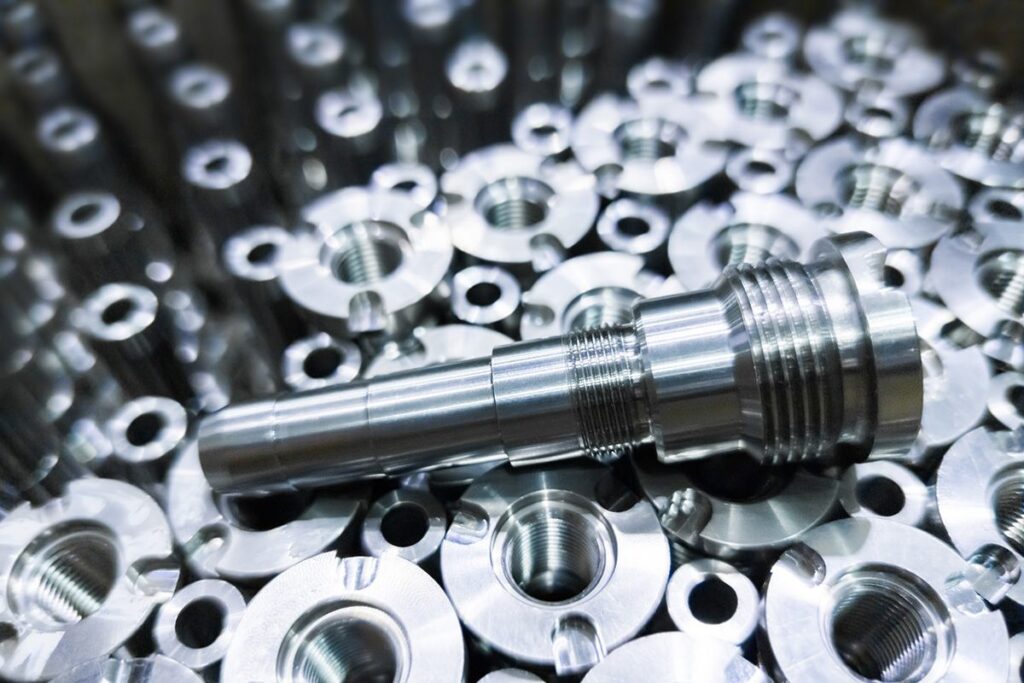
In turning, the workpiece rotates at high speed while the cutting tool moves along a fixed axis to cut the material. It is the ideal method for cylindrical and conical parts: shafts, bushings, pins, couplings, and flanges. In addition to machining the outer diameter, drilling, grooving, and threading are also performed on the lathe. We have covered this topic in detail in a separate article: What Is a CNC Lathe?.
Milling
The logic of milling is reversed: this time, the tool rotates while the workpiece is clamped to the table and moves. Flat surfaces, pockets, slots, gear profiles, and complex three-dimensional shapes are produced by milling. Milling is indispensable for prismatic and free-form parts.
Drilling, reaming, and tapping
Drilling the hole is the first step; however, if a precise bore or clean thread is required, the process doesn’t end there. The hole is reamed to achieve the desired precision, and the thread is cut using a tap. These operations are often completed in a single setup on a lathe or milling machine.
Grinding
Grinding comes into play where the highest surface quality and tightest tolerances are required. An abrasive wheel removes very thin layers from the workpiece to polish the surface and fine-tune the dimensions. Grinding is essential for hardened steels and parts requiring a surface finish below Ra 0.2.
The difference between CNC and conventional machining
On conventional machines, the operator performs every movement by hand; achieving the correct dimensions depends on the operator’s experience. They are still used for single-piece or simple jobs.
On CNC machines, however, the movements are controlled by a computer. In practical terms, this means:
- Reproducibility: The first piece and the five-thousandth piece are the same size.
- Accuracy: On a high-quality CNC machine, tolerances of ±0.01 mm can be easily achieved, while grinding allows for micron-level precision (±0.005 mm).
- Complex geometry: Shapes that are impossible to create by hand can be produced using the program.
- Speed: In mass production, the machine runs nonstop.
In mass production and precision machining, CNC is almost always the preferred choice.
The advantages of machining
There are several key advantages that make machining so widespread:
- High precision. Methods such as casting provide a rough shape; the final dimensions and tolerances are usually achieved through machining.
- No mold required. In casting, you have to commission expensive molds for each part. In machining, the material is machined directly from the raw material, which makes prototyping and low-to-medium-volume production cost-effective.
- A wide range of materials. A wide range of materials can be processed, from aluminum to titanium, and from stainless steel to engineering plastics.
- Superior surface quality. The part produced by the process is usually ready for assembly without requiring additional finishing.
- Flexibility. When a design change is needed, you update only the program, not the mold.
There’s another side to the coin: the resulting chips represent material loss, and at very high production volumes, this can lead to a higher unit cost for the casting. The right method depends on the part’s geometry and the production volume.
What materials are processed?
Machining offers flexibility in terms of materials. The most commonly used materials are:
- Aluminum alloys: Lightweight and easy to work with; widely used in the automotive and aerospace industries.
- Steel and stainless steel: In parts that require durability.
- Titanium: High strength-to-weight ratio; a favorite in the aerospace and defense industries.
- Rice and copper: Conductivity and workability are key.
- Engineering plastics: such as POM, PEEK, and nylon.
Each material has its own specific cutting speed, tool selection, and cooling requirements. We cover material selection in a separate guide: Which Metals Can Be Machined Using CNC?.
In which industries is machining used?
Precision parts are needed almost everywhere, but some industries are particularly reliant on machining:
- Automotive: Engine and transmission parts, fasteners, special tools.
- Defense industry: Parts with tight tolerances, critical safety requirements, and often requiring confidentiality.
- Aviation: Components that require both lightness and strength and must be manufactured to certified standards.
- Machine manufacturing: Screws, gears, bearings, molds, and fixtures.
- Medical and energy: High-precision, traceable parts.
When should you opt for machining?
A rule of thumb: If a part requires tight tolerances, good surface quality, or complex geometry, and the production volume ranges from a single piece to a medium-sized batch, machining is often the most appropriate method. It’s also ideal for avoiding tooling costs during the prototyping phase; plus, you can seamlessly transition to mass production using the same program you used for the prototype.
For parts with very high production volumes, simple geometries, and loose tolerances, methods such as casting or stamping may offer a cost advantage.
Frequently Asked Questions
What is the difference between machining and casting? Casting shapes molten metal by pouring it into a mold and works by adding material. Machining, on the other hand, shapes material by removing chips from a block. Casting is economical for high-volume production; machining, however, excels in precision and flexibility. In most parts, both processes are used together: casting provides the rough shape, while machining delivers the final dimensions.
What tolerances are achieved in machining? On a high-quality CNC machine, ±0.01 mm is a common target. With grinding and precision machining, tolerances of ±0.005 mm or less—that is, at the micron level—can be achieved. The required tolerance is determined by the part’s function.
Can I order a single-piece production? Yes. One of the biggest advantages of machining is that it does not require molds; therefore, both a single prototype and a production run of thousands can be manufactured cost-effectively.
What do I need to send for production? Generally, a technical drawing of the part (including dimensions and tolerances) or a 3D model (such as STEP or IGES) is sufficient. If you do not have a drawing, production can also be carried out using reverse engineering based on a sample part.
Do you want to have your part manufactured to tight tolerances? Send us your technical drawing or 3D model, and we’ll provide you with the best solution—from prototyping to mass production. Get a Quote →