Trade & Logistics
EU–Turkey Customs Union, A.TR certificate, Incoterms, shipping options and delivery times for CNC parts from Turkey to Europe.
EUR.1 and A.TR Certificates: Proof of Origin and Duty Relief When Importing CNC Parts
It is normal for a European company importing CNC parts from Turkey to see an A.TR or EUR.1 in the shipping documents; but what the two mean, which is valid in which country, and the fact that neither is proof of "origin" in the same sense are often confused. This article explains that the A.TR is a free-circulation document and the EUR.1 a preferential origin document, which one is required for which country, how rules of origin apply to machined metal parts, invoice and supplier's declarations, and what buyers who re-export their products need to watch.
Customs Read more
Incoterms Guide for CNC Part Exports: EXW, FCA, DAP, DDP
In a CNC contract manufacturing quote, the difference between "EXW Istanbul" and "DAP Stuttgart" is not just freight; it is the export declaration, insurance, the point of risk transfer and customs responsibility. This guide explains the Incoterms 2020 rules specifically for CNC part trade, sets out the most suitable options for European buyers (usually FCA and DAP) with reasons, and shows how to compare quotes on equal terms.
Logistics Read more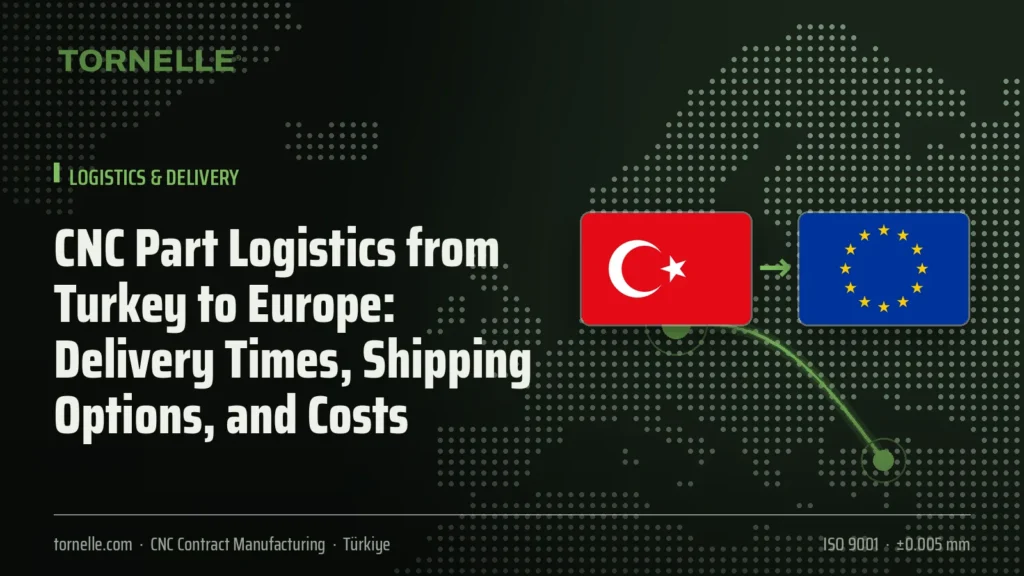
CNC Part Logistics from Turkey to Europe: Delivery Times, Shipping Options, and Costs
One of Turkey’s greatest advantages for shipping to Europe is its logistics: 4–6 business days to Central Europe by road, and 1–2 days by air freight. This guide explains road transport (full truckload and less-than-truckload), Ro-Ro, air freight, and express courier options, country-specific delivery times, typical costs, Incoterms selection, and appropriate packaging for CNC parts.
Logistics Read more
The EU–Turkey Customs Union and the A.TR Certificate: Duty-Free Trade in CNC Parts Imports
The biggest advantage of importing CNC parts from Turkey to the EU is the Customs Union: With the A.TR movement certificate, industrial products enter free circulation without paying customs duties. This article explains in simple terms for buyers what the A.TR is, how it differs from the EUR.1, how VAT is applied, the required documents, and common mistakes.
Customs Read more