Blog
Technical insights, industry news and engineering tips from the world of CNC machining.
Advantages of Outsourcing CNC Work from the Czech Republic to Turkey
The Czech Republic, one of Europe’s most industrialized economies, has a long-standing tradition in automotive and machinery manufacturing; however, historically low unemployment, a shortage of skilled CNC operators, and rising wages are limiting the capacity of Czech manufacturers. Turkey offers Czech buyers a complementary contract manufacturing solution through the Customs Union, which allows for duty-free imports, a 3–4-day road transport route, and expertise in automotive-grade machining.
Czech Republic Read more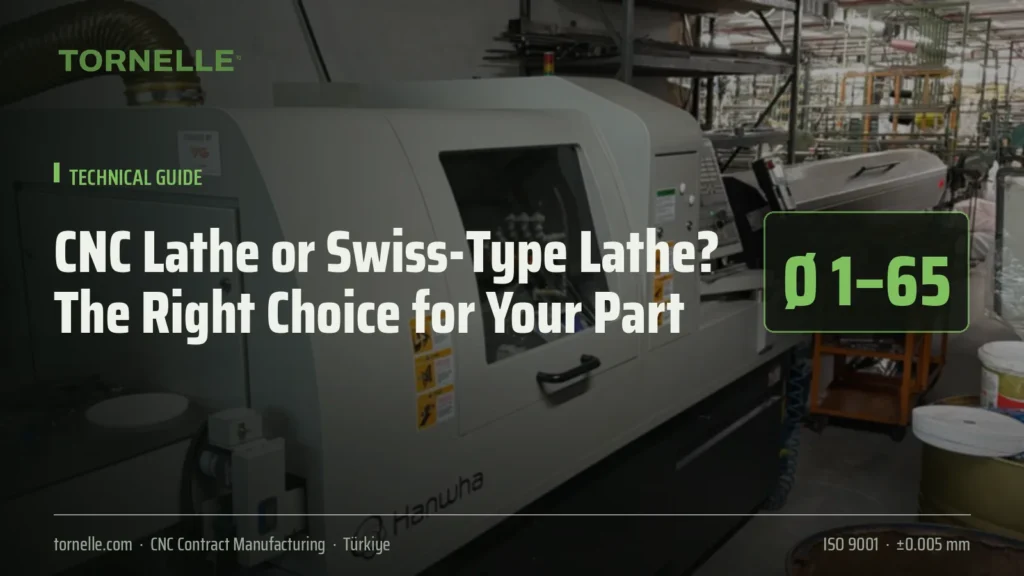
CNC Lathe or Swiss-Type Lathe? The Right Choice for Your Part
When requesting a quote for a cylindrical part, whether the supplier will produce it on a conventional CNC lathe or a Swiss-type lathe determines the unit price and lead time. The Swiss-type lathe is unmatched for small-diameter, long, and high-volume parts; the CNC lathe, on the other hand, excels at large diameters, low volumes, and jobs requiring complex clamping. This article compares the two technologies using a decision matrix.
Technical Read more
Advantages of Outsourcing CNC Work from Poland to Turkey
Poland is one of Europe’s fastest-growing manufacturing hubs; however, rapidly rising minimum wages, a shortage of skilled lathe and milling machine operators, and full production capacities are driving Polish manufacturers to seek additional contract manufacturing capacity. Thanks to the Customs Union, Turkey offers duty-free access, a 3–5-day overland connection, and competitive machine-hour rates, making it a complementary sourcing option for Polish buyers.
Poland Read more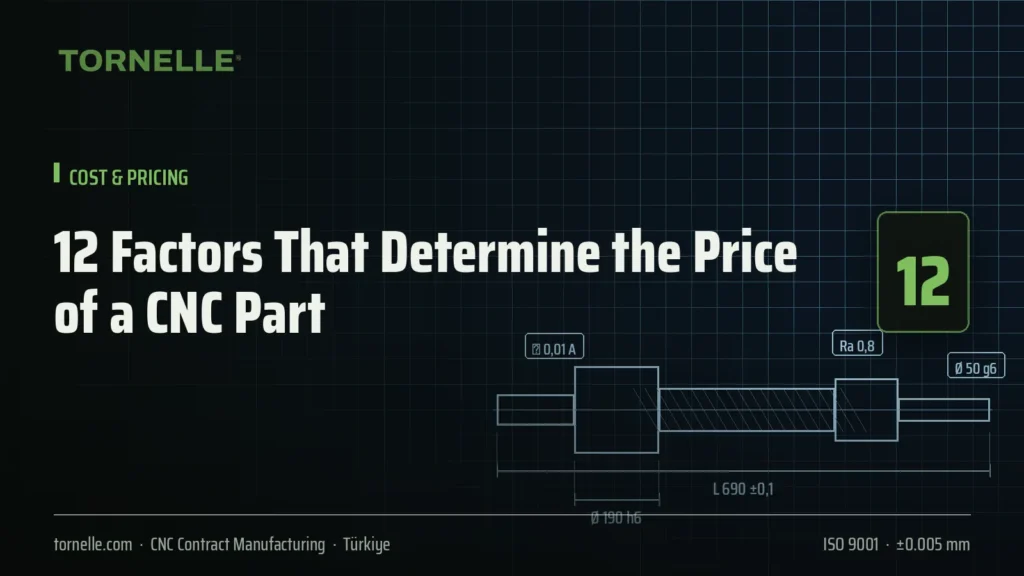
12 Factors That Determine the Price of a CNC Part
Why can the price of two CNC parts that look identical differ by a factor of two? The answer lies in the combination of 12 factors: material, quantity, tolerances, surface roughness, geometric complexity, number of operations, setup, measurement requirements, coating, packaging, lead time, and logistics. This article explains each factor, its impact on price, and what the buyer can do to reduce costs.
Cost Read more
Advantages of Outsourcing CNC Manufacturing from Finland to Turkey
In Finland, which boasts strong engineering sectors such as forestry machinery, mining equipment, marine engines, elevator systems, and electronics, the supply of CNC parts is becoming increasingly expensive due to high labor costs. Thanks to the EU Customs Union, Turkey offers Finnish buyers a strong alternative with duty-free import, competitive machine-hour rates, and flexible batch sizes.
Finland Read more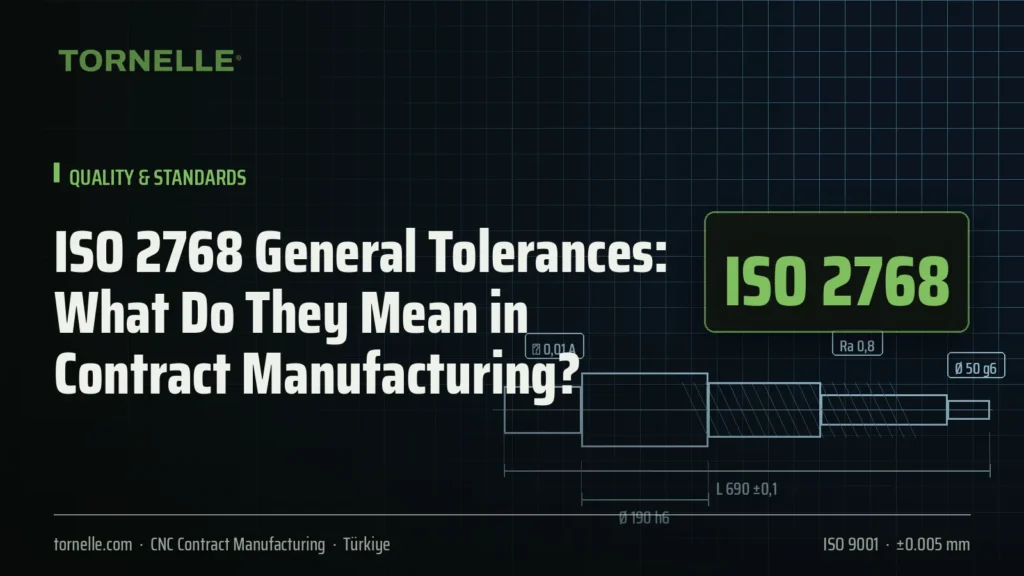
ISO 2768 General Tolerances: What Do They Mean in Contract Manufacturing?
The "ISO 2768-mK" notation in the corner of the technical drawing specifies the tolerance within which any dimension without a specified measurement is acceptable; in other words, it directly affects the part’s price, measurement time, and risk of rejection. This article explains the ISO 2768-1 and 2768-2 classes using tables, describes which class makes sense for which part in CNC contract manufacturing, and highlights common mistakes.
Quality Read more
Advantages of Outsourcing CNC Machining from Norway to Turkey
In Norway, which has one of the highest labor costs in Europe, the supply of CNC parts for the offshore, maritime, aquaculture, and energy sectors is becoming increasingly expensive. Turkey is a strong nearshoring option for Norwegian buyers thanks to the EFTA free trade agreement, a robust machining infrastructure, and competitive machine-hour rates. This article summarizes the advantages, customs and logistics realities, and key considerations.
Norway Read more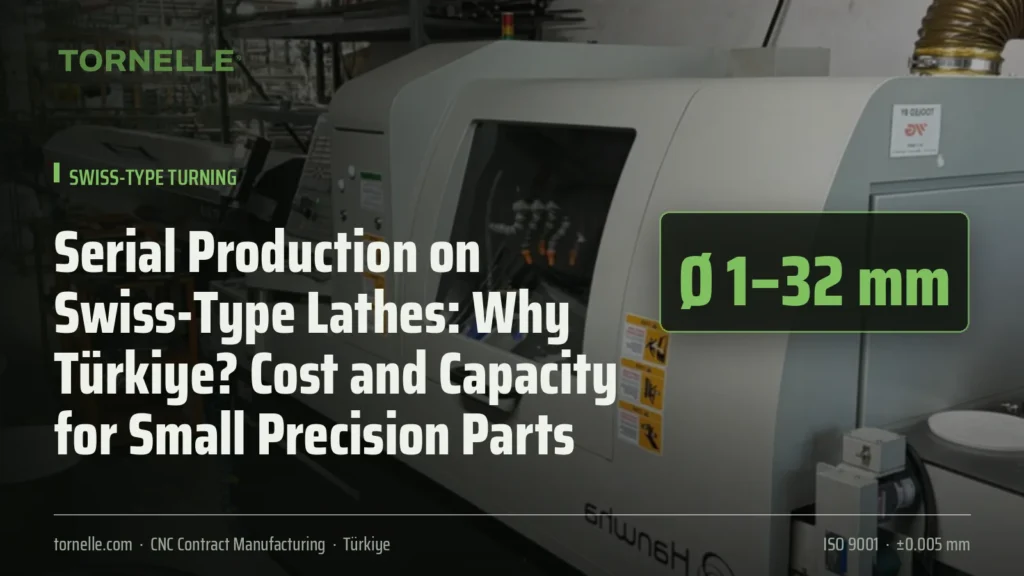
Series Production on Swiss-Type Lathes: Why Turkey? Cost and Capacity for Small Precision Parts
Connector pins, implant screws, hydraulic fittings, sensor housings—the natural production method for small, precision, high-volume parts is the sliding automatic machine. Turkey has become a strong production hub for these parts thanks to its extensive fleet of sliding automatic machines, experience gained from the automotive and defense industries, competitive machine-hour rates, and proximity to Europe.
Slide-Type Automatic Machines Read more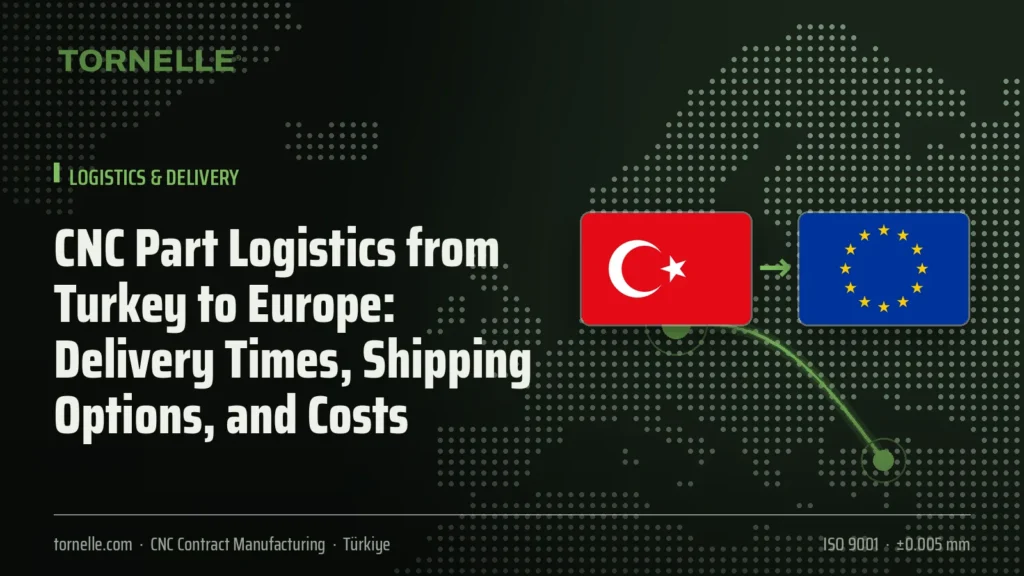
CNC Part Logistics from Turkey to Europe: Delivery Times, Shipping Options, and Costs
One of Turkey’s greatest advantages for shipping to Europe is its logistics: 4–6 business days to Central Europe by road, and 1–2 days by air freight. This guide explains road transport (full truckload and less-than-truckload), Ro-Ro, air freight, and express courier options, country-specific delivery times, typical costs, Incoterms selection, and appropriate packaging for CNC parts.
Logistics Read more